

Every meeting starts the same way: three minutes of purgatory while the stragglers join. Someone says “how fast is this year going?!” Someone else confirms that it is, in fact, going fast. A third person is on mute, narrating their own unmuting.
We’ve accepted this as the cost of doing business. It doesn’t have to be.
Why does workplace small talk feel so dead?
Because it’s a script, and everyone knows their lines. “How was your weekend?” “Good, quiet. Yours?” Nobody’s lying, but nobody’s talking either.
Here’s the thing: rapport isn’t built during the slides. It’s built in the first three minutes, in the gap between humans arriving and the agenda taking over. Waste that window every time and you end up with a team that’s worked together for years and knows precisely nothing about each other.
People collaborate with humans, not job titles.
The Teams deck came out of every off-site I’ve ever sat through. Two minutes of one real question beats an hour of trust falls.Ness, founder of Good Chat
How do you open a meeting without the cringe?
- The “expertise” opener. “Before we dive in, what’s a ‘useless’ skill you have that actually makes you better at your job?” Playful, quick, and it surfaces hidden talents you’ll actually use one day.
- The “highlight reel” pivot. “If we had unlimited budget for one weird office luxury that made everyone’s Tuesday 10% better, what would you pick?” A what-if that gets people laughing and, occasionally, produces a genuinely good idea.
- The “learning” hook. “What’s one thing you learned this week, work or not, that surprised you?” Quietly builds a culture where curiosity is normal.
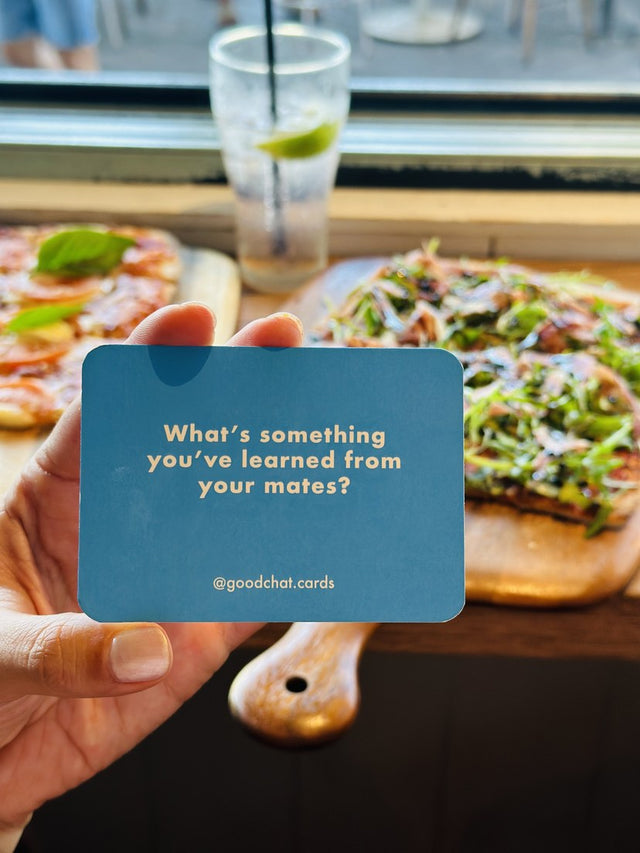
What’s a ‘useless’ skill you have that actually makes you better at your job?
What actually changes if you do this?
The energy, first. People log on early to see what the question is. Then trust, slowly, because someone admits their useless skill is folding fitted sheets and suddenly they’re a person, not a job title in a rectangle.
Great teams aren’t built on spreadsheets. They’re built on the accumulated weight of a hundred small moments of actually knowing each other. You can start collecting those on Tuesday.
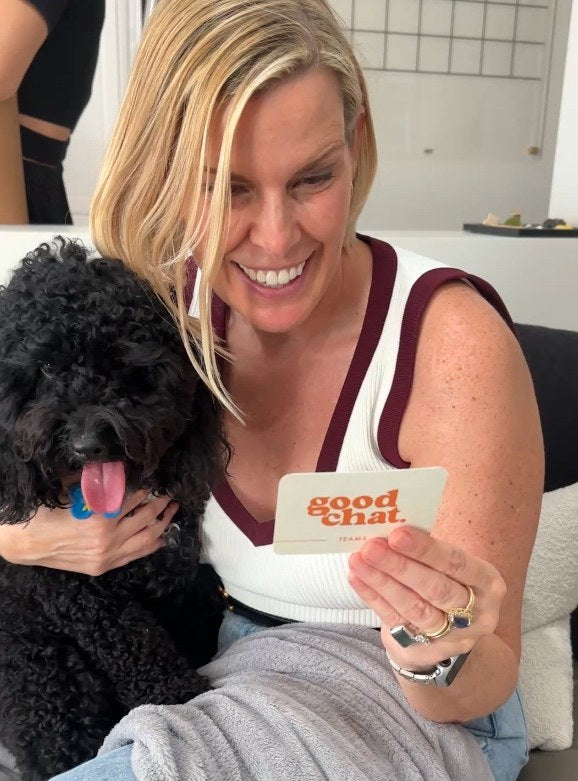
As someone who facilitates a lot of team conversations professionally, I can say the questions in this deck are genuinely well written. Will be recommending to clients.Ross, in a five-star review of the Teams deck
One question. Three minutes. That’s the whole hack. The rest of the meeting can stay boring, we can’t fix everything.